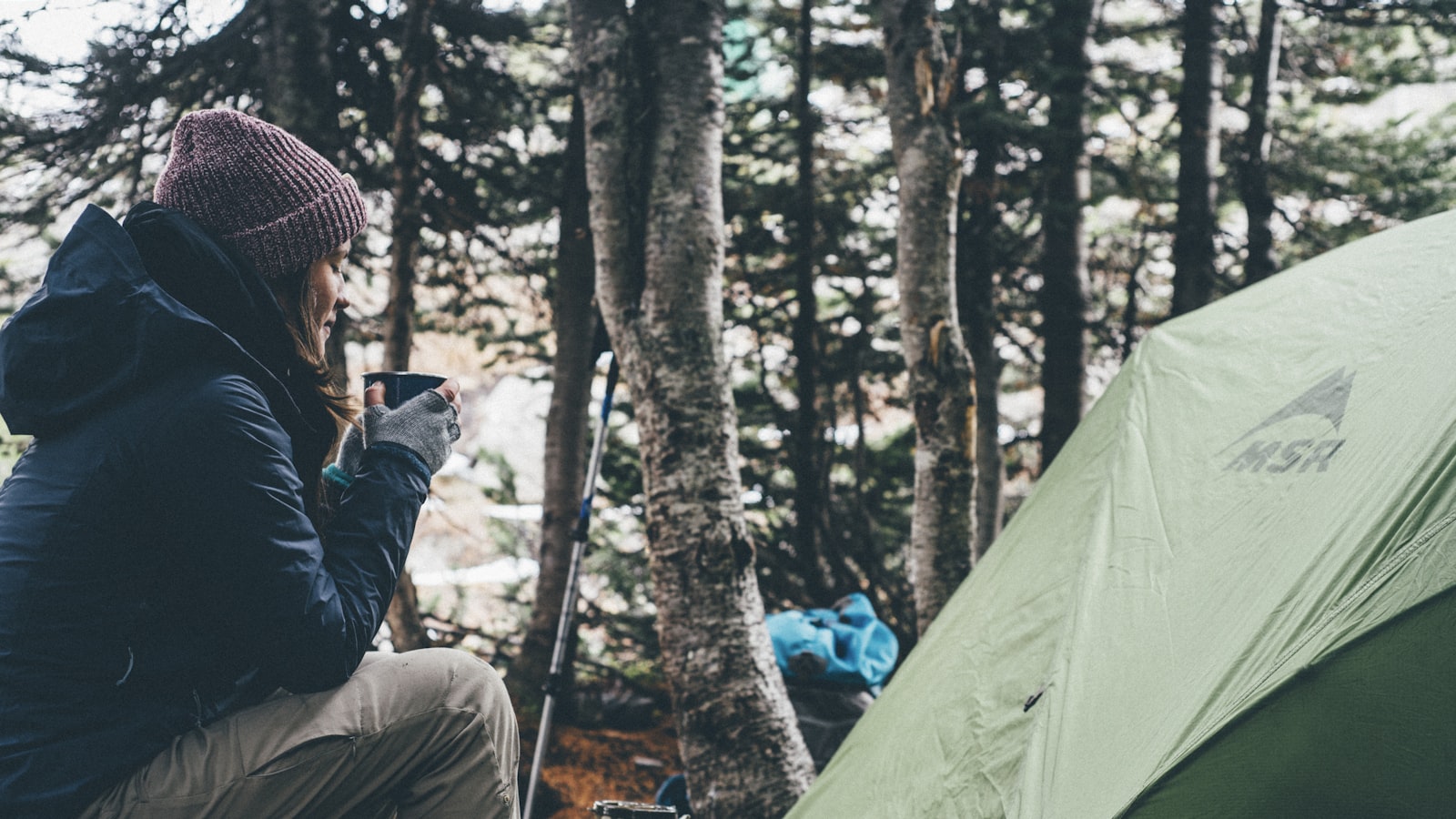
Rain has a way of separating campers who enjoy the outdoors from campers who only enjoy perfect weather. And the difference between the two isn't toughness — it's preparation. A wet trip can be genuinely lovely: the sound of rain on the tent, the smell of the woods, a warm drink while the weather does its thing outside. It can also be miserable and, in the wrong conditions, dangerous. Which one you get comes down almost entirely to choices you make before the first drop falls.
The core principle is simple. Wet on its own is just uncomfortable, but wet combined with cold and wind is what turns a trip risky, because that combination pulls heat out of you fast. So everything here is aimed at two things: staying dry, and staying warm even when staying dry isn't fully possible. Do both, and rain becomes atmosphere instead of an ordeal.
Read the forecast and prepare either way#
Preparation starts before you leave, with an honest look at the forecast for your exact location, not just the nearest town. Weather in the hills, woods, and near water is often wetter, colder, and windier than in the valley nearby. Check the outlook a few days ahead, again the morning you leave, and note not just whether rain is coming but how much, how hard, and whether wind or storms come with it.
Then pack for rain regardless of what the forecast promises, because forecasts are guesses and mountain weather in particular loves to prove them wrong. A rain jacket, a way to keep spare clothes dry, and a tent you trust should be standard on every trip. The cost of carrying rain gear you don't use is nothing; the cost of needing it and not having it can be a ruined or genuinely dangerous night.
If the forecast turns severe — heavy storms, flooding, high winds, or a cold snap you're not equipped for — the best decision is often to postpone. There is no prize for camping through weather you're not ready for. Choosing not to go, or going somewhere more sheltered instead, is exactly the kind of judgement that keeps the outdoors fun and safe.
Pitch smart for wet weather#
Where and how you pitch decides whether rain runs off harmlessly or pools under your tent. Choose high, well-drained ground and avoid the lowest points, hollows, and any path water would take downhill in a downpour. A slight rise that sheds water is worth far more than a flat, scenic spot that turns into a shallow pond. Our guide on how to choose a good campsite goes deeper on reading the ground for exactly this.
When you set up, put the rainfly on properly and make sure it's taut and clear of the inner tent so water runs off rather than pooling or soaking through. Stake and guy everything out tightly, since wind usually comes with rain and a loose pitch fails fastest in a storm. Use your groundsheet correctly, tucked so its edges don't stick out past the tent and channel water underneath you.
A few small choices pay off once the rain starts:
- Pitch under an open sky, not directly beneath trees, which drip long after the rain stops and can drop branches in wind.
- Create a covered porch or use a tarp for a dry spot to cook, change, and store wet gear outside the sleeping area.
- Keep the tent door facing away from the prevailing wind so rain doesn't blow straight in when you open it.
- Set up before the rain arrives if you possibly can, because pitching in a downpour is where wet trips go wrong.
Keep a dry zone and manage moisture#
Once you're set up, the whole game is keeping some part of your world reliably dry. Designate a strict dry zone — usually your sleeping area — and defend it. Wet boots, dripping jackets, and soaked gear stay in the porch or a separate bag, never in with your sleeping kit. One wet item dragged into your bed can dampen everything and cost you the night's warmth.
Manage condensation too, because in the rain it's easy to seal yourself in and end up damp from the inside. Crack a vent or the door slightly to let humid air escape, even though it feels wrong to open anything while it's raining. Keep your sleeping bag off the tent walls, where condensation collects, and change into dry sleeping clothes at bedtime so you're not carrying the day's damp into your bag. Staying warm through a wet night is its own small craft, and how to sleep warm while camping covers the system that makes it work.
In wet weather, dry clothes are precious. Guard at least one full set of dry layers as if the trip depends on it, because in cold, wet conditions it genuinely might. The moment you're wet and can't get warm, you're no longer just uncomfortable.
Little habits help everything stay drier: shake off rain before ducking inside, keep a small towel by the door, and store electronics and matches in sealed bags. None of it is difficult. It's just a mindset of protecting dryness actively instead of hoping for it.
Know when to call it#
Most rain is a comfort problem, and everything above handles it. But you also need to recognize the point where weather stops being an inconvenience and becomes a hazard, because that line is where good judgement matters most. Heavy, prolonged rain can flood low ground and swell streams and rivers alarmingly fast. Storms bring lightning, and high winds can bring down branches and trees. A cold, soaking wind can chill you toward hypothermia even in mild-looking conditions.
Stay alert to the signs. Rising water near your camp, an approaching electrical storm, wind strong enough to strain your tent, or anyone in your group getting cold and unable to warm up are all reasons to act. Being willing to pack up and leave, move to safer ground, or end the trip early is not giving up — it's the most experienced thing a camper can do. The outdoors will always offer another, better weekend.
Watch your group for cold, too. Persistent shivering, clumsiness, confusion, or extreme tiredness in cold and wet conditions are warning signs of a body losing heat dangerously, and they call for getting warm and dry immediately and seeking real medical help if they don't improve fast. Don't try to tough out or self-treat a serious cold-related illness in the field; that's what professionals are for.
Handled with a bit of foresight, rain is just another mood of the outdoors, and often a memorable one. Prepare for it, pitch for it, guard your dry zone, and keep honest watch on the conditions and the people you're with. Get those right and you'll come home with the best kind of camping story — the one where the weather turned, and you were ready.